
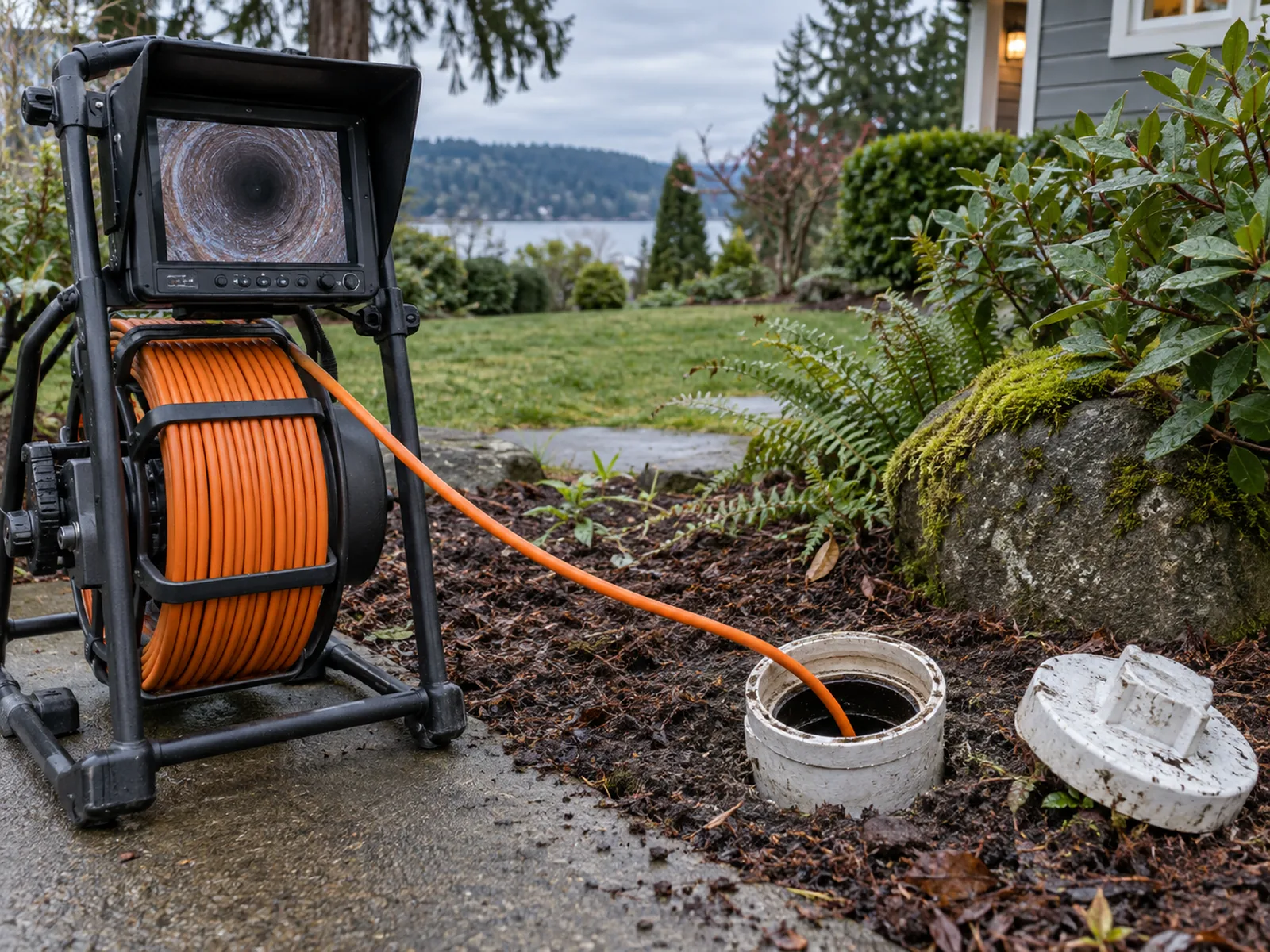
When one fixture changes.
A slow kitchen sink, a single toilet that will not clear, or one bathroom drain with standing water gives you a specific starting point. Record whether the symptom is slow drainage, a complete stoppage, gurgling, overflow, or a return after a previous clearing.
One affected fixture does not prove the problem is limited to that fixture. It simply means the first observation is localized.
When several fixtures change together.
If a toilet, tub, floor drain, or more than one sink changes around the same time, list them in the order the symptoms appeared. Note which fixture is closest to the lowest level and whether water moves or backs up when another fixture runs.
This pattern can be useful when discussing a shared branch or main-line question, but it is not a diagnosis. The actual location depends on the building layout, line condition, and available access.
What to check before making the call.
- Which fixtures are affected and which still drain normally?
- Did the change happen suddenly or build over time?
- Has the same pattern happened before?
- Is there a cleanout or access point you already know about?
- Is any water near electrical equipment or an unsafe area?
Avoid turning a clue into a claim.
Do not assume that a gurgle, odor, or temporary improvement identifies the exact obstruction. Avoid mixing drain chemicals or opening an unknown access point just to test a theory. A clear symptom list gives the next conversation a better starting point.
Fixture-versus-line boundary: Comparing symptoms helps organize the request, but it does not replace an on-site diagnosis or confirm responsibility for a public drainage system.