
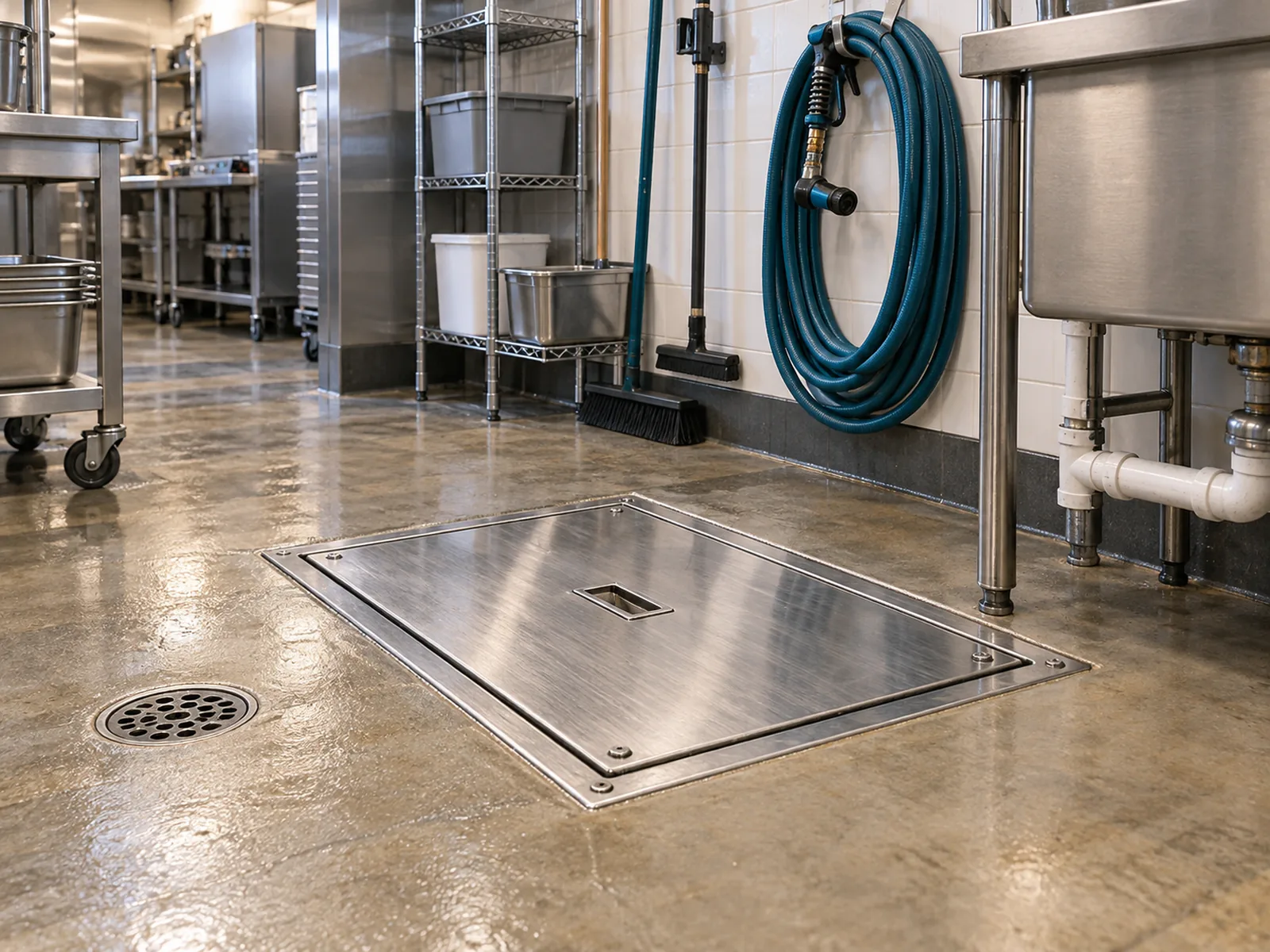
Commercial kitchen drainage

Grease Trap Cleaning for Bellevue Businesses

Grease-trap questions belong to the kitchen workflow. Say whether the issue is at the trap, sink, floor drain, or connected line, with maintenance history.

Commercial kitchen drainage and grease management context in Bellevue
Describe the visible feature before assuming a cause or method.

When grease trap cleaning fits the situation

A grease trap cleaning request often starts with food-service areas where grease, solids, flow, access, or scheduled maintenance affects drainage.

Benefits of a precise grease trap cleaning request

  • Separate trap-level from downstream symptoms
  • bring maintenance timing
  • plan access around food-service operations.

What can be lost by waiting or guessing

Without service timing and connected-fixture context, a recurring issue looks like a one-time slowdown and can interrupt kitchen work.

What to have ready before contact

  • Name the trap and connected fixtures
  • include last service, interval, flow, odor, solids, grease, overflow, schedule, and access.
Service process

Grease trap cleaning process by intent

The grease-trap cleaning path stays anchored to the visible feature, symptom pattern, and safe access available.

01

Map connected fixtures

Record this step with the observed symptom, timing, and access context.

02

Record maintenance

Record this step with the observed symptom, timing, and access context.

03

Set an operating access window.

Record this step with the observed symptom, timing, and access context.

Questions before the request

Questions about grease trap cleaning.

Is every kitchen backup caused by the trap?

No. Connected fixtures and downstream lines differ.

Why does maintenance history matter?

It shows recurrence and use changes.

Why share the last cleaning date?

It shows whether the symptom is recurring, changed with use, or appeared outside the usual maintenance pattern.

What if a sink is slow too?

Name the sink and trap together, then say whether floor drains or other fixtures are also affected.

What access should a kitchen prepare?

Identify the trap, connected fixtures, route, operating window, and the person who can provide access.

Before you contact

What changes the grease-trap service question?

The trap should be described as part of the kitchen system. Connected sinks, floor drains, maintenance intervals, solids, odor, and operating windows help separate a trap question from a downstream line problem.

Details that change the scope

  • Maintenance: last known cleaning, repeat interval, and recent change in use.
  • Connected fixtures: sinks, prep areas, floor drains, and discharge points.
  • Operations: food-service schedule, access, and restricted areas.

Grease-trap boundary: Describe what is observed, what is unknown, and what access is safe. Do not promise a method or outcome from the symptom alone.

Bellevue service request

Share the kitchen context

For grease-trap questions, include the trap location, connected fixtures, last service, operating window, and visible flow pattern.

Start a request
Bellevue location context

Bellevue grease-trap service context

The map shows the Bellevue contact location. Commercial kitchen access, maintenance scope, and operating timing must be confirmed separately.

Address on file1633 151st Ave SE
Bellevue, WA 98007
Phone on file(425) 380-0451
Confirm the service path