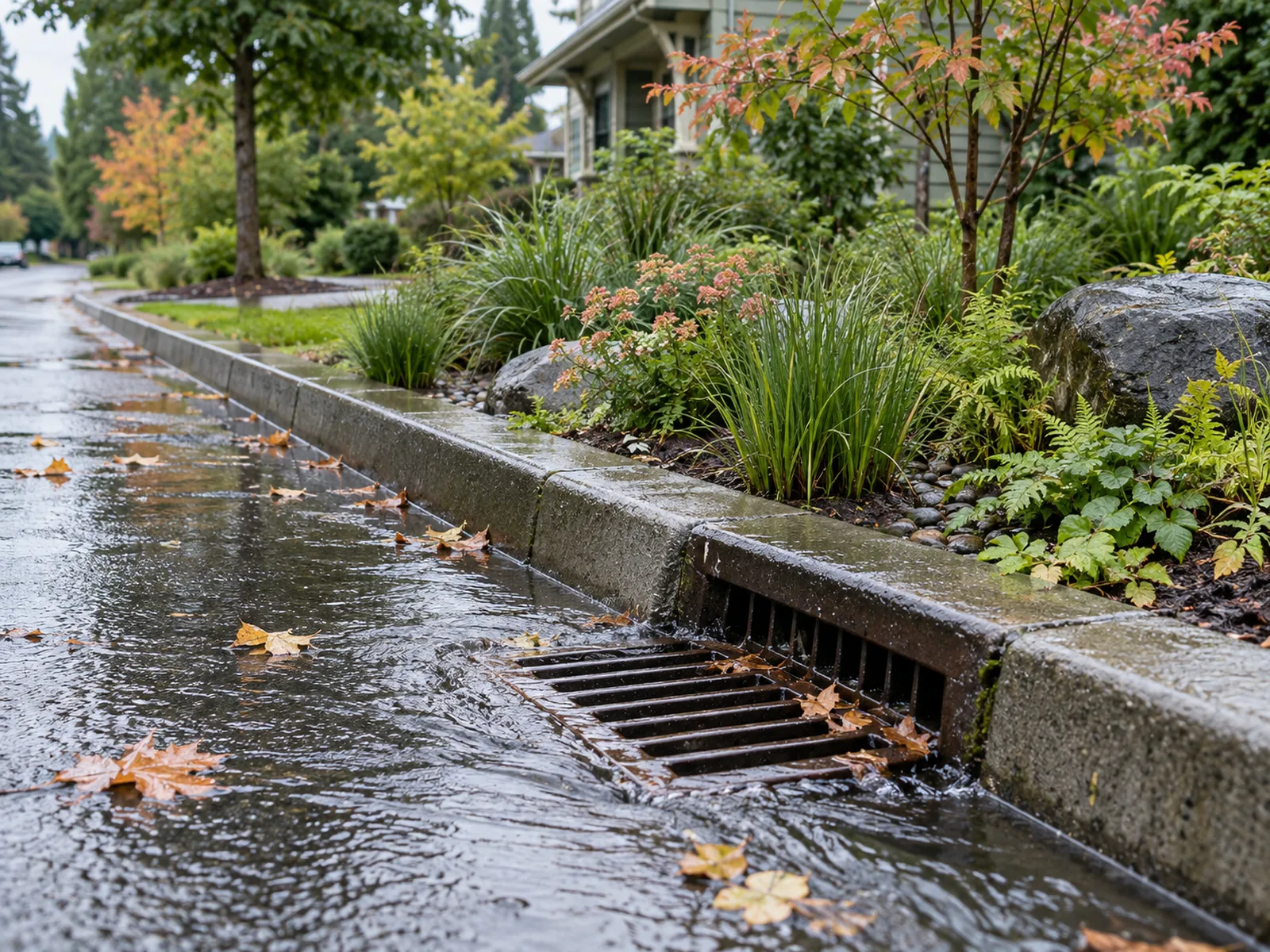
Identify the feature before the fix.
Describe whether you are looking at a curb inlet, grate, catch basin, channel, yard drain, or another collection point. Note whether the water is on private property, in a shared area, or near a public right of way.
Compare timing and conditions.
Record whether the water appears only during or after rain, remains during dry weather, or returns after nearby irrigation or water use. A photo taken from a safe distance and the time since the last rainfall can make the situation easier to explain.
Keep the boundary question visible.
A feature that looks like one connected drainage system can cross property or maintenance boundaries. If the concern appears to involve a public street, public inlet, or right of way, check the City of Bellevue guidance or the responsible public department before treating it as a private service request.
Use safe observation only.
Do not enter a catch basin, lift a heavy cover, reach into moving water, or work near unstable ground. Keep children and pets away from open water and use a safe vantage point to document the grate, surface water, and nearby property context.
Stormwater boundary: Notes about standing water help organize the request, but they do not replace an on-site diagnosis or confirm responsibility for a public drainage system.